I’m a consultant and educator who loves to talk about people, change & organisations. Join over 10000+ readers every week!
Everyone is Worried about the Wrong People
|
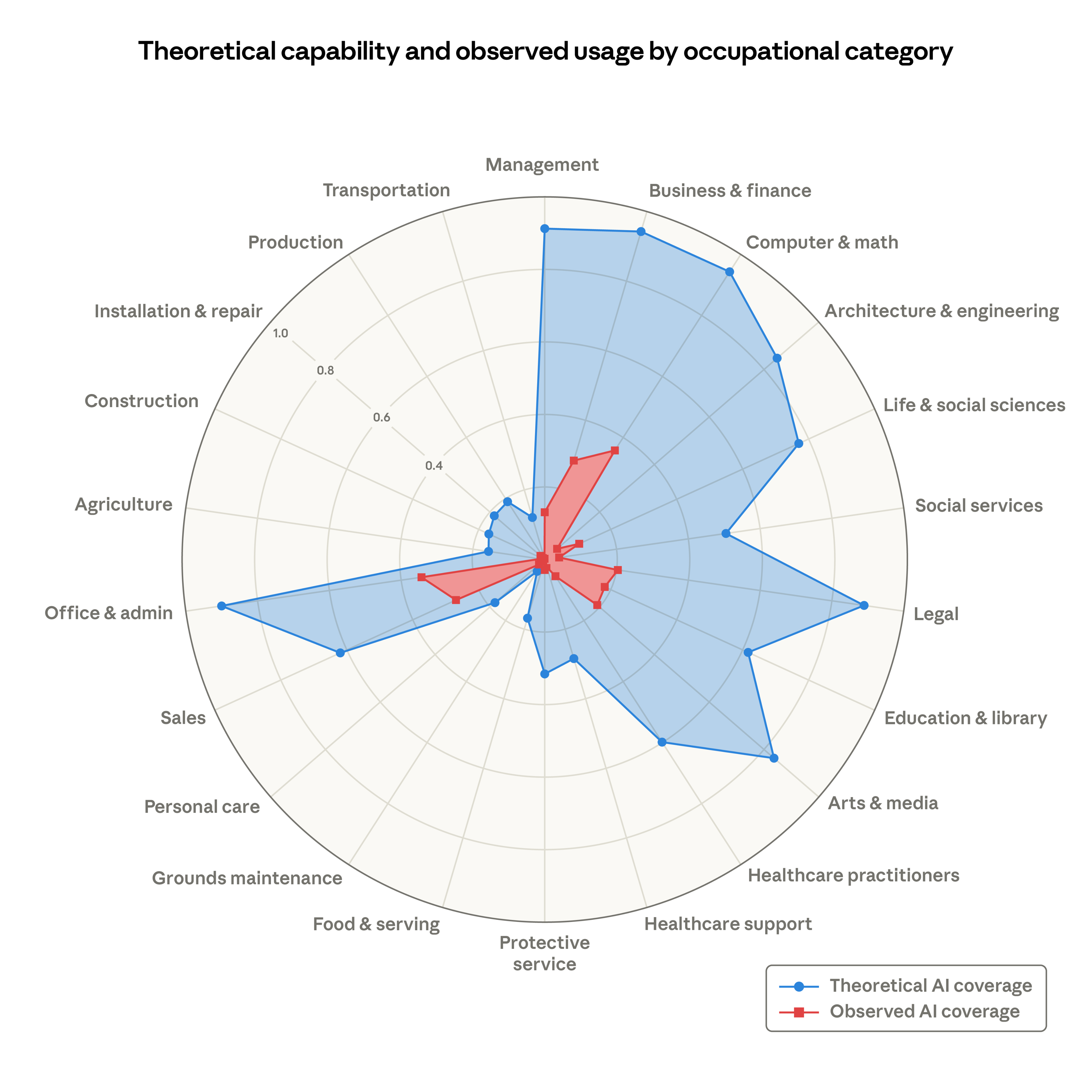
The data is in. And it says something organisations are not ready to hear. The conversation about AI and jobs has been going on for years. And it has been almost entirely wrong. Wrong about who is at risk. Wrong about what the risk actually looks like. And spectacularly wrong about how much time we have. Last week, Anthropic published something different. Not a prediction. Not a think piece. An analysis built from millions of real Claude conversations, cross-referenced with occupational data, measuring which tasks AI is already performing in professional settings right now. The headline finding? No significant rise in unemployment yet. Reassuring enough that most people stopped reading there. They shouldn't have. "The gap between what AI is currently doing and what it is theoretically capable of doing is enormous. And it is closing fast." That gap between capability and deployment is the real story. And it has enormous implications for how organisations are (or aren't) preparing their people. The map nobody wanted to seeHere is what the data actually shows. Blue is what AI could theoretically do across different job categories. Red is what it is doing right now on Claude in real professional use.
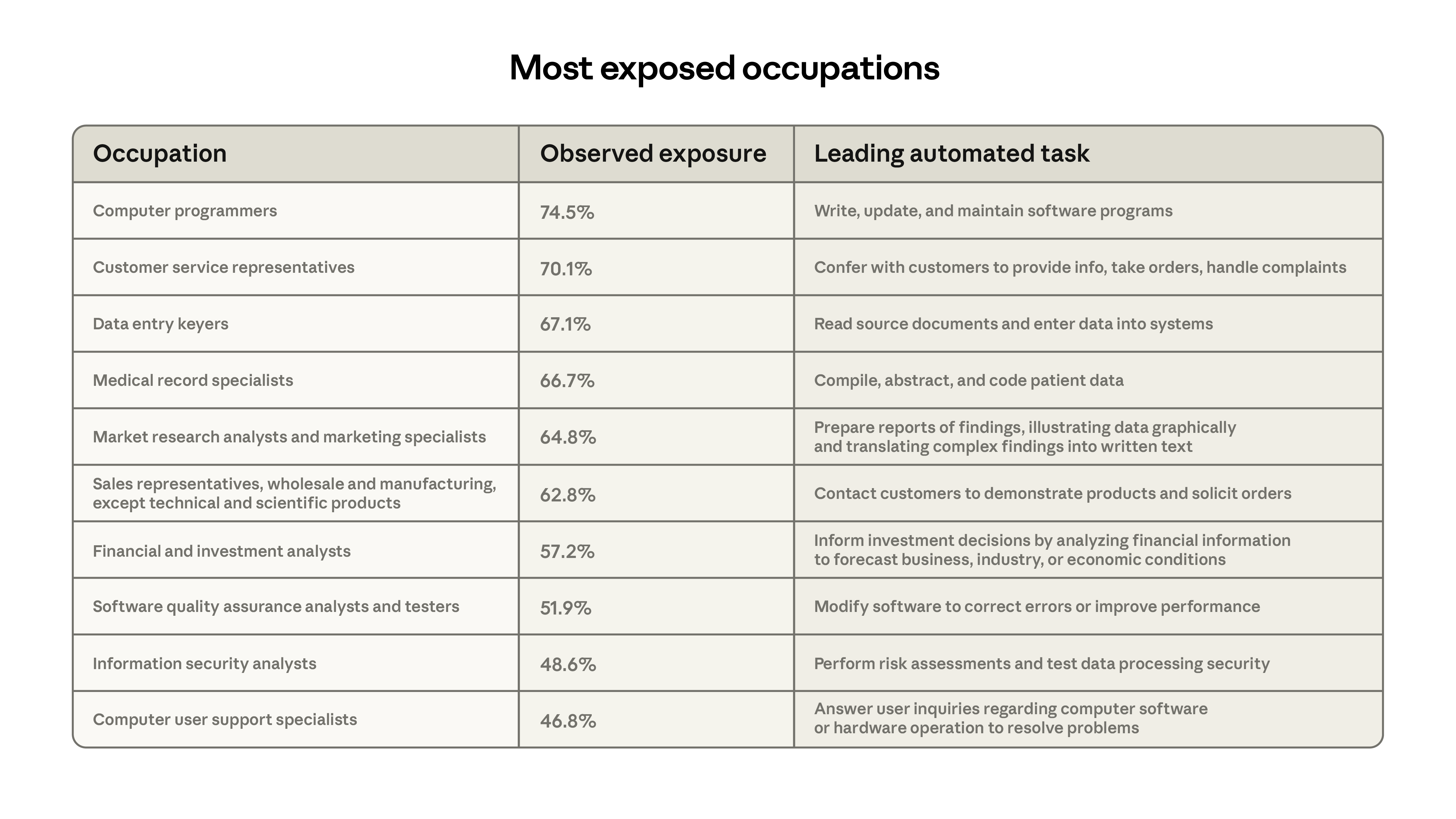
Blue: what AI could theoretically do. Red: what it is actually doing. The gap is what organisations are ignoring. The red area is not small. But the blue area dwarfs it. Particularly in Office and Admin (90% theoretical capability, a fraction deployed), and Computer and Math (94% theoretically possible, only 33% currently observed). This is not a sign that AI will not arrive. It is a sign that it has not fully arrived yet. Two very different things. The jobs most exposed right nowWhen you look at which specific roles are already seeing the highest AI task coverage, the list is striking.
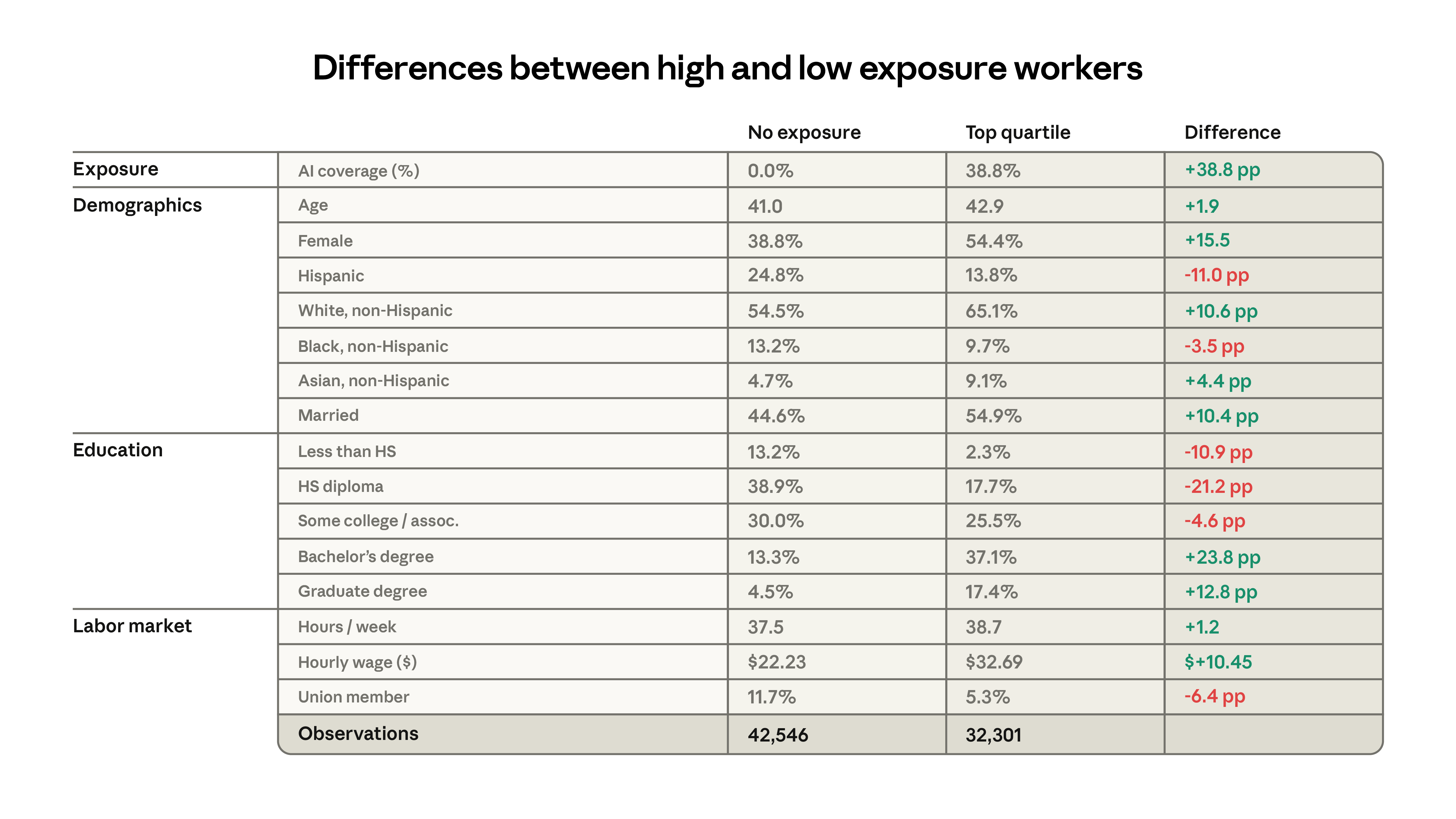
Computer programmers at 75% task coverage. Customer service representatives. Financial analysts. Data entry. These are not low-skill roles. Computer programmers: 75% of their tasks already covered. Customer service representatives. Financial analysts. Claims adjusters. These are professional, qualified, often well-paid roles. Not the ones people assumed would go first. The people nobody expectedHere is the finding that should have stopped people in their tracks. Look at who sits in the most AI-exposed roles.
The most exposed workers are more likely to be female, more educated, and higher paid. The people running AI strategy sessions are often the ones most at risk from them. More likely to be female. More likely to hold a degree or postgraduate qualification. Earning 47% more on average than the unexposed group. Graduate degree holders are four times more represented in the most exposed cohort than in the least exposed one. This is not a story about automating low-wage, low-skill work. That was always the assumption. The data says otherwise. The people in your organisation leading change programmes. Designing strategy. Running HR. Producing analysis. Writing reports. They are the ones the data is describing. "The people telling their organisations to prepare for AI are often the ones the data says are most exposed to it." What organisations are actually doing about thisNot much. Not yet. Not honestly. The response so far has been mostly performative. AI literacy sessions. A new policy. A working group with no mandate. A culture survey asking people how they feel about change. These are not strategies. They are the motion that replaces strategy when organisations are not ready to confront the real question. The real question is not "how do we help our people use AI?" It is "what does this organisation actually look like in three years, who is in it, and what are they doing?" Most leadership teams cannot answer that. Because answering it honestly requires a conversation that nobody has opened yet. The data says there is still time. The gap is real. Deployment is lagging behind capability. But the same data shows that the gap is closing. And the organisations that wait for the gap to close before they act will find they have run out of runway at exactly the moment they need it most. This is not a technology problem waiting for a technology solution. It is a people problem. Right now. In front of you. If this landed, send it to someone who needs to read it. Source: Anthropic, "Labor Market Impacts of AI: A New Measure and Early Evidence," March 2026. Maxim Massenkoff & Peter McCrory. More like this every week. If this landed, share it with someone who needs to hear it. |
Arella HR
I’m a consultant and educator who loves to talk about people, change & organisations. Join over 10000+ readers every week!
Arella HR · The Weekly Brief · March 2026 Arella HR · The Weekly Brief · March 2026 You are not shortof applicants.You are short ofthe right ones. By Hayden Swerling · Recruitment · Organisational Effectiveness Most strategic leaders treat recruitment as an operational queue. Roles open. Timelines slip. HR updates the pipeline. You approve the offer. The whole thing disappears into the operational layer and you only hear about it when it goes wrong. That is the problem. Recruitment has been...

Arella HR · The Weekly Brief · March 2026 The survey isthe problem. By Hayden Swerling · Organisational Effectiveness · Change Management There is a ritual that plays out in organisations every year. HR sends the link. Leaders chase participation. Results come back. A working group forms. And twelve months later, they do it all again. The employee engagement survey is now as standard as the annual appraisal. And about as useful. In 2026, organisations are spending more on measuring engagement...
The Diagnostic Deficit Forget the solution. Nobody actually knows what the problem is. That’s not a cynical observation. It’s a structural one. Organisations spend enormous time, money and energy fixing things. Restructuring. Retraining. Relaunching. Rebranding. And then they do it again two years later because nothing actually changed. Not because the solutions were wrong. Because nobody diagnosed the problem correctly in the first place. This is the Diagnostic Deficit. The most expensive...